Executive Summary (TL;DR)
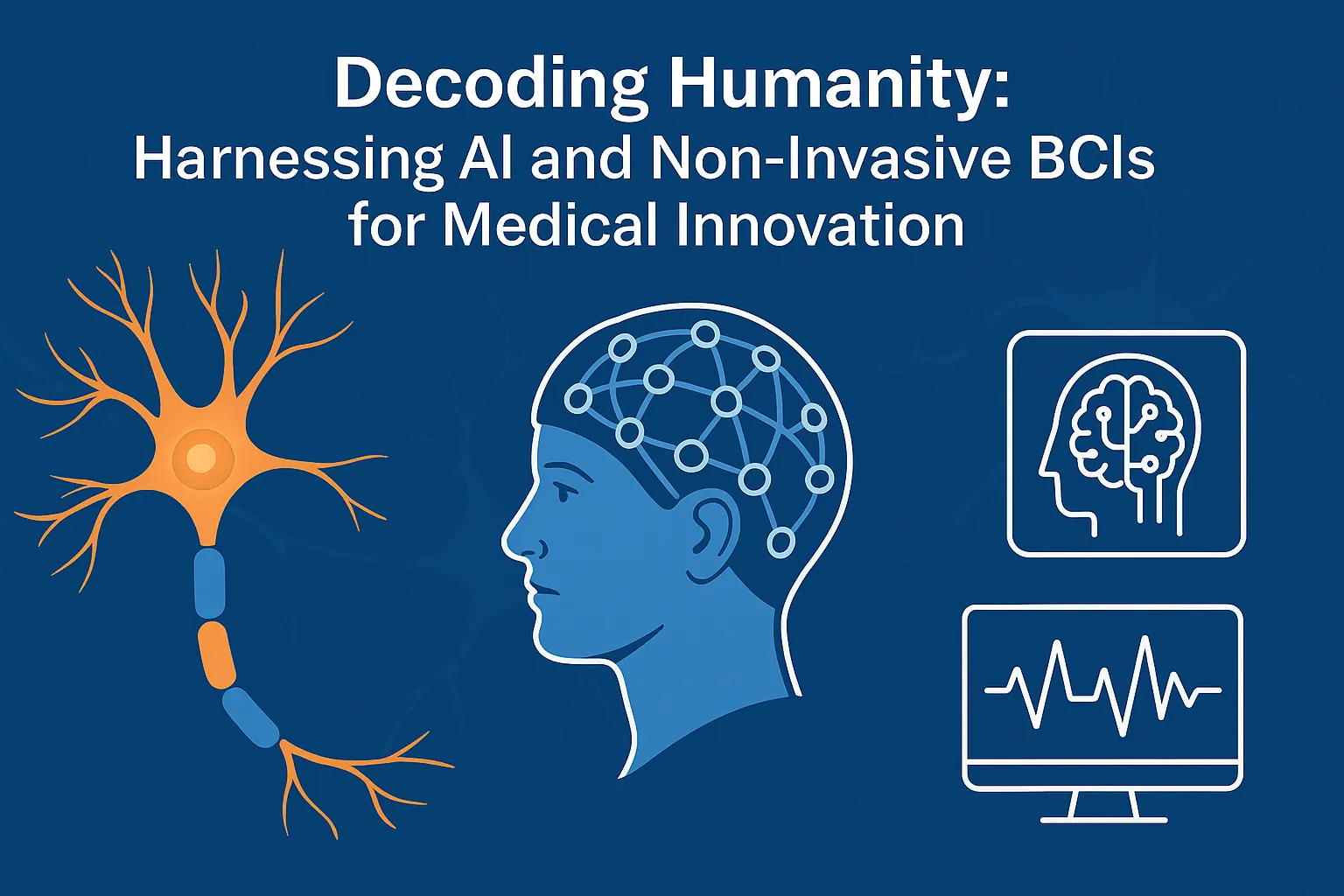
The future of neurotechnology lies in predictive, non-invasive BCIs rather than high-risk surgical implants. Shifting the focus to preemptive AI-driven prediction unlocks a scalable path to managing neurological health.
Who Should Read This
Key Takeaways & Shareable Quotes
“The neurotech breakthrough won't be surgical; it will be predictive.”
“BCI scale is achieved by decoding non-invasive noise, not by invasive implantation.”
Neuro-prediction is making the transition from speculative research to a $6B industrial pivot. The shift is irreversible. While early laboratory benchmarks focused on proof-of-concept decoding under highly controlled, noiseless conditions, the current commercial sector is defined by the rapid deployment of production-grade neural networks that translate consumer-grade, low-resolution sensor data into actionable clinical insights. This is a massive shift in how cognitive states are quantified. Real-time.
The Neuro-Prediction Pivot is live. This post establishes that AI-driven, non-invasive BCI is a commercially scalable neurotechnology. Research shows it can pivot the market from late-stage intervention to preemptive prediction.
Beyond surgical implants, the next trillion-dollar health frontier isn't restoring movement. It's predicting your next seizure or depressive episode with a $500 headset and an AI model. This is the core strategic challenge.
The neurotechnology race is accelerating. The narrative is heavily weighted toward high-risk, invasive implants. While invasive companies generate high-bandwidth data, they target a constrained market of late-stage intervention.
Why does the market favor the Neuro-Prediction Pivot?
AI-driven, non-invasive BCI is the only commercially scalable neurotechnology. It pivots the market toward mass-market cognitive augmentation.
This is a projected $6.5 Billion opportunity by 2030.
The EHV framework ensures that as these AI-driven systems scale, systemic trust is maintained through automated constraints. Conventional wisdom currently favors invasive technology based on a misguided disruptive innovation lens.
The low-end, non-invasive BCI is uniquely positioned to address the massive market of early-stage monitoring. The core value of AI in BCIs is not restoration.
It is predictive control. This allows for clinical-grade intelligence without the surgical risk.
How does AI provide 10x advantage for BCIs?
The traditional challenge of non-invasive BCI was the poor signal-to-noise ratio. Raw EEG data is polluted by muscle movement and external interference.
This is where Deep Learning marks the structural shift. Deep Learning models are decoding semantic meaning from the residual noise.
Extraction of high-level cognitive patterns from complex datasets is the core competence. This fusion of advanced optics and AI democratizes access to brain data.
What are the scalable neurotechnology pillars?
Expert research has demonstrated the ability to achieve semantic reconstruction of language from non-invasive recordings. This translates thought into text or speech.
It captures meaning. It ignores motor intent.
Meaning is the only signal that scales. Advanced Deep Learning models process this low-resolution neurodata to achieve exploitability.
The market is rapidly filling with platforms designed for high-RoSA deployment. Synchron focuses on minimal invasiveness via the vascular system for early clinical integration.
How do we secure the predictive frontier?
Invasive tech is for restoration, while non-invasive tech is for prediction. The pivot enables the monitoring of cognitive load, stress markers, and early signs of Neurological Disorders.
This drastically expands the total addressable market beyond high-acuity patients. Predictive monitoring allows for pre-emptive clinical intervention that bypasses traditional constraints.
As non-invasive BCIs become consumer-grade, the regulation of Neurodata Privacy will become the defining market constraint. Public trust requires a data architecture where secure collection is non-negotiable.
What are the Executive Focus Areas?
Re-evaluate the balance between high-acuity, low-volume invasive BCI and the scalable non-invasive path. Redirect at least 40% of R&D spend toward perfecting the AI-to-Noise ratio for non-invasive platforms.
Each organizational commitment to the mastery of this non-invasive frontier will define the ultimate competitive position of the firm within the rapidly evolving global healthcare sector for the next generation.
Achieving clinical-grade predictive accuracy in ambient environments is the priority. Align data aggregation strategies to prioritize the secure collection of neurodata.
Neurodata Privacy is not a feature. It is the primary regulatory moat.
Quantify the Return on Safety/Accessibility (RoSA). Minimal clinical risk must be paired with maximal market reach for common Neurological Disorders.
Apply this strategic framework to secure the long-term value of this market. The next market leader will be defined by their ability to scale safety.
Technical Friction Point
This approach holds when decoding low-to-medium frequency cognitive signals in ambient environments. It encounters limits when applied to high-bandwidth neural control scenarios (e.g., controlling a complex prosthetic limb) where the processing latency of AI noise-cancellation models exceeds the 20ms human physiological threshold, making surgical implants the necessary architectural choice.
Technical Index
- Framework Version: 1.0.2 (Neuro-Scaling)
- Core Principle: AI-to-Noise Ratio (ANR)
- Archival Priority: Retention Established
- Status: Strategic Blueprint
Cite This Work
Formal Academic Reference
"Sharma, Riddhi Mohan. (2025). Neuro-Prediction Pivot: Why AI-to-Noise Beats Surgical Scale. riddhimohan.com, April 18, 2025. /blog/neuro-prediction-pivot-why-ai-to-noise-beats-surgical-scale"
This research is open for academic citation and peer-review. Established to support the advancement of AI Governance and Industrial Ethics.
Related Insights

Architecture Is Policy: Compiling Governance into the AI Stack
Building this portfolio offered a live use-case of Ethical Hyper-Velocity. The focus is on a three-tier governance architecture that manages the automation of pre-build guardrails pertaining to consistent, reliable standards, performance budgets, and the professional integrity of the builders.
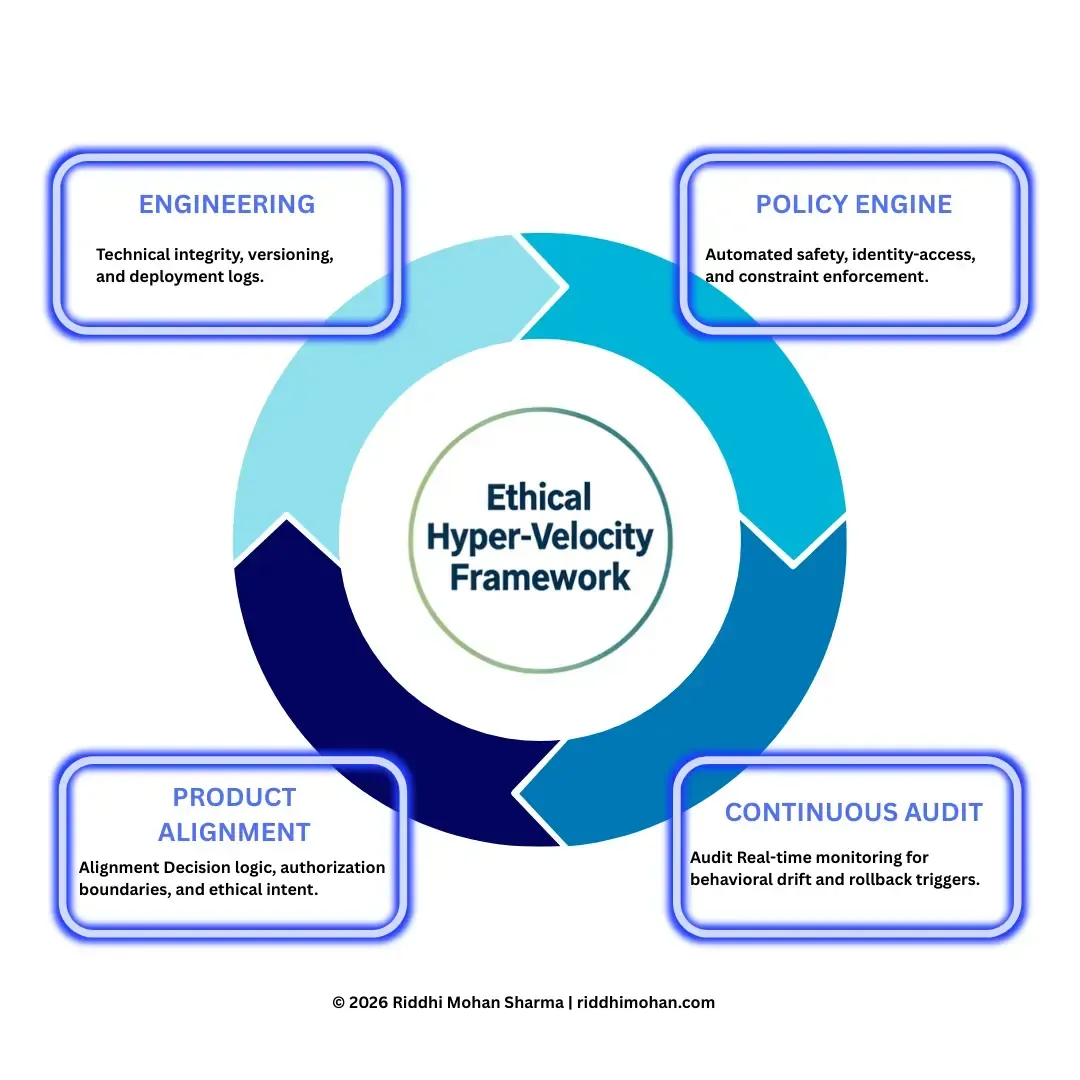
Ethical Hyper-Velocity (EHV): Compiling Governance into the AI Inference Stack
EHV is not a 'policy framework' but a Governance-Aware JIT Compiler that eliminates the 'Governance Latency' inherent in ISO 42001 and human-in-the-loop audits. By compiling governance directly into the inference stack, we move from reactive compliance to proactive, sub-millisecond enforcement.
HPPIE: RAG Without Persona Modeling Fails Patient Clinical Relevance
A RAG pipeline that returns the same results for a 25-year-old athlete and a 70-year-old with a diabetic condition has not solved relevance. It has transferred the burden of clinical filtering to the patient. HPPIE fuses persona modeling directly into retrieval to close that gap.

Quantum Infrastructure: Why Governance Scales Before Qubit Fidelity
On June 12, 2026, I presented as an invited speaker at the DOE Office of Science SCAC Quantum Subcommittee Town Hall. The three observations from my research focused on program design rather than qubit fidelity.

Riddhi Mohan Sharma
Senior Technology Leader. Global Identity Architecture. M&A Technology Integration. AI Strategy.
Senior Technology Leader specializing in Global Digital Identity Architecture and M&A Technology Integration. Track record across multi-million dollar P&L, AI strategy, healthcare compliance (GDPR/HIPAA), and Identity platforms scaled to 3.5M+ users.
Framework Attribution
Disclaimer:The views, frameworks, and architectures presented here (including Architecture Is Policy / Ethical Hyper-Velocity and HPPIE) are my personal thoughts and original syntheses. They are inspired by and draw lessons from my broad enterprise-scale research and experience in healthcare identity, M&A integration, and AI governance. They do not represent the views, policies, or practices of my employer and are not based on any specific proprietary information, internal systems, code, metrics, or confidential details from my current or past roles. All examples and implementations are generalized or self-hosted on this personal site.